GridteamAI Insight · Links to Gap 46 · Direct from source.
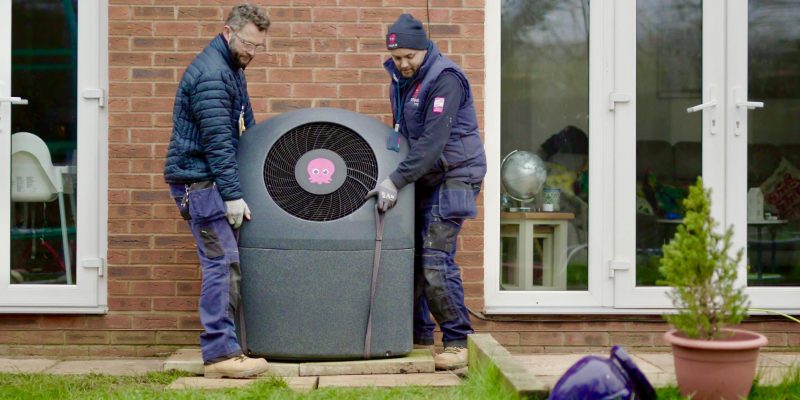
The Boiler Upgrade Scheme grant programme combined with the Clean Heat Market Mechanism supplier obligation now form the principal UK heat pump deployment policy framework. Boiler Upgrade Scheme grants support customer transition: typically £7,500 for air source heat pumps, £7,500 for ground source, £5,000 for biomass.
Clean Heat Market Mechanism requires boiler manufacturers to install a phased proportion of low-carbon heating systems, driving manufacturer transition + supply chain readiness. The 2023-24 deployment baseline of ~55,000-60,000 heat pump installations per annum is the starting point for the scale-up required to meet UK Net Zero pathway commitments.
For DESNZ, the policy framework sits inside the wider heat decarbonisation pathway alongside Heat Network Zoning Act 2024, Future Homes Standard 2025 (effectively prohibiting new gas boilers in new-build), Energy Company Obligation (ECO), Social Housing Decarbonisation Fund (SHDF) and Public Sector Decarbonisation Scheme (PSDS). The hydrogen for heat strategic decision (Gap 44) remains the largest single variable for long-term pathway direction.
For boiler and heat pump manufacturers, the Clean Heat Market Mechanism drives product development, UK manufacturing capacity expansion and supply chain readiness — Worcester Bosch, Vaillant, Baxi, Ideal, Mitsubishi, Daikin, Panasonic and others. EUA + manufacturer programmes are scaling through 2025-2027 to meet phased installation requirements.
For the installer workforce, scale-up is the binding execution variable. The current heat pump installer base is materially short of the level required for target deployment rates. MCS (Microgeneration Certification Scheme) training and accreditation, cross-trade transition from gas-safe engineers to heat pump installers, and the Clean Energy Jobs Plan workforce trajectory (Gap 26 · 440k → 860k canonical) drive the scale-up trajectory.
For customers, the financial framework is the variable. Capital cost (typically £8,000-£15,000+ depending on property and system) interacts with grant support, operating cost (electricity vs gas spark spread), property suitability, comfort and operating experience. Fuel poverty + customer affordability + political sustainability drive policy direction.
GridteamAI's Gap 46 report, the Tranche 2 Gas flagship, decodes UK heat decarbonisation end-to-end. The four pathways, the policy framework, the manufacturer and installer scale-up, the customer transition, the gas grid exit pathway and the cross-volume integration with electricity grid, RIIO-3, hydrogen production, heat networks, CCUS clusters and workforce.
Useful? Tell us 👍
GridteamAI. AI intelligence with a human specialist touch.
§ Photo: Octopus Energy press centre