GridteamAI Insight · Links to Gap 28 · Direct from source.
The Contracts for Difference Allocation Round 7 settled the UK floating offshore wind question. 192.5 MW cleared at £216.49 per MWh — the strike price benchmark for the Celtic Sea Round 6 and Scottish Round 5 pipelines now in development. AR7a brought further differentiated allocations including the Tidal Stream Pot 2 ring-fenced 20.9 MW at £265 per MWh, a 28.57% saving on the cap, the deepest single percentage saving across the round.
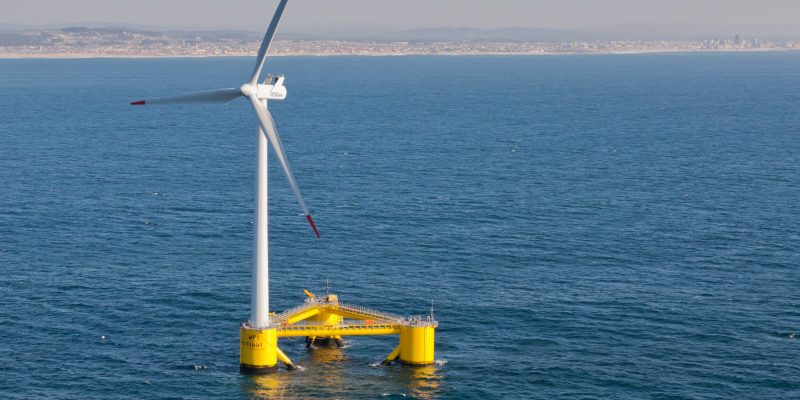
UK floating offshore wind has moved from prototype to programme. The pipeline across the Crown Estate Celtic Sea Round 6 + Crown Estate Scotland ScotWind + INTOG rounds pushes past 17 GW. The Floating Offshore Wind Manufacturing Investment Scheme (FLOWMIS) supports the manufacturing supply chain.
The Department for Business and Trade industrial strategy framework provides the policy lift. Developer + supply chain + port operator + Crown Estate alignment is now the binding execution variable, not the technical or commercial framework.
For developers, the question is sub-structure procurement at scale, project finance under the AR7 revenue stack and UK content commitment — SSE Renewables, Equinor, RWE, Iberdrola, Vattenfall, Ørsted, Floventis, Falck Renewables, Ocean Winds. For supply chain firms (Babcock, Harland & Wolff, Lamprell, BiFab equivalents, fabricators), the question is volume commitment, capex sequencing and workforce expansion. For port operators (ABP, Forth Ports, Peel Ports, AGP, Cromarty Firth, Port of Milford Haven), the question is heavy-lift assembly investment + quayside loading capacity + offshore towing.
Cross-volume: AR7 (Gap 08) provides the revenue stack. EGL + ASTI (Gap 11) provides the transmission integration. The Clean Energy Jobs Plan workforce trajectory (Gap 26 · 440k → 860k) includes floating wind expansion. South Wales AIGZ (Gap 18) provides the Celtic Sea industrial adjacency.
GridteamAI's Gap 28 report covers UK floating offshore wind end-to-end — the pipeline, the supply chain capacity constraint, the port investment requirement, the revenue stack, the Crown Estate Welsh Marine Plan interaction, and the cross-volume integrations with AR7, EGL/ASTI, workforce and AIGZ. For HSEQA + sustainability + EIA advisory firms, floating wind is the most significant single new UK service-line opportunity of the late 2020s.
Useful? Tell us 👍
GridteamAI. AI intelligence with a human specialist touch.
§ Photo: Untrakdrover, Wikimedia Commons, CC BY-SA 3.0