Ask us
Email a specialist.
Tell us what you're bidding for, or which sector you're watching. We'll reply with the report that covers it, or scope a piece of work. 👍
Email us →UK battery, long-duration and pumped hydro storage intelligence.
Four volumes on this sector, every figure traced to a named primary source and carried at a stated verification date. We read DESNZ, Ofgem, NESO and the developers so that you do not have to. Scroll down to see what is in them.
The architecture is built. The 2030 number is execution.
Dormant forty-two years, and now a regulated asset class with a first window already named.
The three storage classes, the Cap-and-Floor windows, and the pipeline anchors.
Read from Ofgem, SSE Renewables, Gilkes and NESO, and dated.
Check which Cap-and-Floor window a scheme sits in before you commit to its programme.
Track the BESS pipeline against the 23–27 GW Clean Power 2030 target, not against announcements.
See where long-duration storage procurement opens, and which technology class it is open to.
Read the pumped hydro pipeline with its regulated-asset logic explained in plain terms.
We've found the level of support to be consistently strong. Queries are dealt with quickly, the advice is practical and, importantly, the team understands the realities of delivering infrastructure projects on the ground.
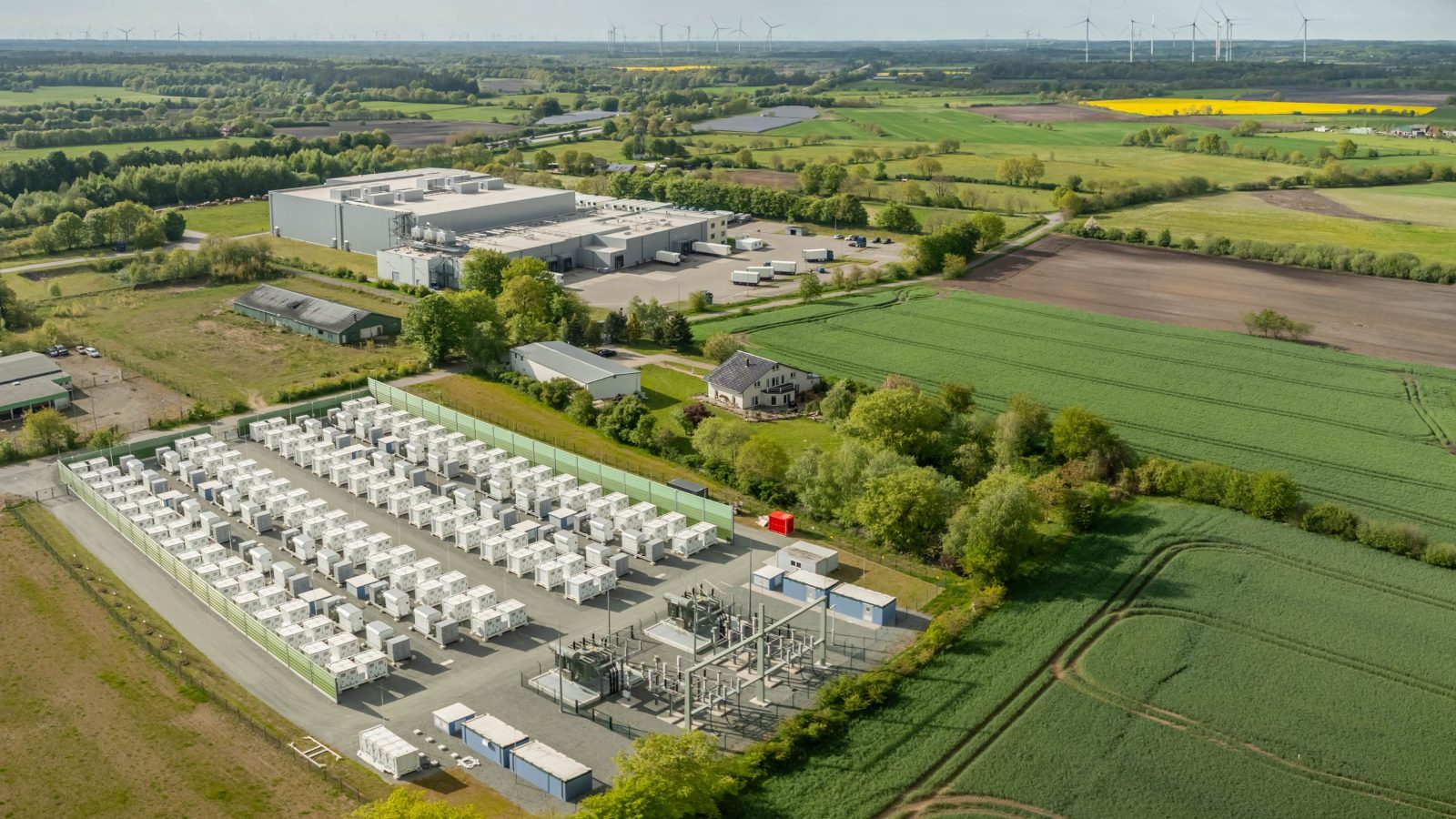
Energy storage takes electricity when there is more than the grid needs and gives it back when there is less, so a windy night can boil your kettle the next morning. Most of Britain's batteries do this for one to two hours at a time. Storage that can keep going for eight hours or more, such as the big pumped hydro schemes that push water uphill and let it run back down through turbines, is called long-duration storage.
Expect plenty of battery work, because batteries are going in faster than ever. According to the analysts Modo Energy, Great Britain had 8.5 GW of batteries able to store 14.4 GWh by the end of September 2026, after a record quarter that added 917 MW. GW is how much power they can give out at once, and GWh is how much energy they hold.
Take Thorpe Marsh near Doncaster for scale. Its developer now puts the battery at 1.45 GW and 3.1 GWh. The project raised about £1 billion of loans and investment in September 2025 and is due to start running in the third quarter of 2027.
Compare the 8.5 GW running now with the government's much higher target. Its Clean Power 2030 Action Plan, published on 13 December 2024, calls for 23 to 27 GW of batteries and 4 to 6 GW of long-duration storage by 2030.
Plan furthest ahead for long-duration projects, because they take the longest to build. On 26 June 2026 Ofgem provisionally chose 16 of them, totalling 7.6 GW, for a cap and floor deal, which sets a minimum and a maximum for each project's income. The 16 include the Coire Glas and Earba pumped hydro schemes in the Highlands.
| Figure | What it is | Source and date |
|---|---|---|
| 8.5 GW | Batteries running in Great Britain at the end of September 2026, holding 14.4 GWh | Modo Energy, 12 October 2026 |
| 23 to 27 GW | Battery capacity the government's plan needs by 2030, alongside 4 to 6 GW of long-duration storage | Department for Energy Security and Net Zero, Clean Power 2030 Action Plan, 13 December 2024 |
| 7.6 GW | Long-duration storage Ofgem has provisionally chosen for a cap and floor, across 16 projects | Ofgem, 26 June 2026 |
Watch for Ofgem's final cap and floor list. Ofgem says it is due this autumn, but it had not been published by 9 November 2026. Being on the list makes it far easier to raise the money to build, so check our map once it is confirmed to see which projects on it sit near you.
Read the latest storage news in The Wire below, with a link to each source. Open any project on our map to see when we last checked it.
Not sure which of our reports you need? Email book@gridteamai.com and we'll point you to the right one. Figures checked 9 November 2026.
The 4 reports in this sector cover the UK storage stack to consultancy-grade depth — the BESS pipeline, the LDES window, the pumped hydro programme.
Watch this sector live on the boards — the Heatmap for its projects, the Data Board for its targets against delivery.
Open any volume and you get consultancy-grade depth: twelve findings, headline figures, the Director's Six-Check, a glossary of named entities, and named UK suppliers across battery cell, BESS integrator, civil engineering, EPC consortium, and operations. deep report PDF + two-page Crib Sheet + quarterly Currency Addendum.
£295 single volume · from £99 a month, or £995 a year: one named reader — the full multi-volume catalogue, every new volume released during the year, and the 120 Safety Moments. Team £2,495/yr (up to 10 named readers) · Enterprise £4,995/yr (whole company, up to 250 employees) · Corporate £9,995/yr (above 250 employees).
Most recently checked first.
Tell us what you're bidding for, or which sector you're watching. We'll reply with the report that covers it, or scope a piece of work. 👍
Email us →