← GridteamAI

Purchase access

This is part of the paid GridteamAI Quarterly Sector Report.

Purchase access — book@gridteamai.com

£295 single volume · £995/yr annual · Team £2,495 · Enterprise £4,995 · Corporate £9,995. Secure checkout coming soon; email to purchase today.

GridteamAI · Quarterly Sector Report · Gap 41
UK Water Sector Bioresources + Circular Economy — the Ofwat Bioresources market, the AD biogas stack and the nutrient-recovery story · Water beachhead
Series consistency · canonical Gap-series system
A4 · 210 × 297 mm · 3 mm bleed (not shown)
UK English · ~30 pp · v2.1 / Q1 2031
FRONT MATTERi · Cover · ink · full bleed
GridteamAI
Quarterly Sector Report
Volume Gap 41
Water Utilities · Bioresources + Circular Economy
by GridteamAI
UK · Sludge · AD · Biogas · Nutrient recovery United Kingdom · Q1 2031

The Circular
Stream.

Wastewater sludge as a regulated market and a clean-energy resource — the Ofwat Bioresources market, the AD biogas stack and the circular nutrient story.

gridteamai.com · book@gridteamai.com v2.1 · Q1 2031 Water · Volume 7
05 — 06Executive summary · spread
UK Water Sector Bioresources + Circular Economy · Executive summary05
00 · Executive Summary A two-page brief

A regulated market, a clean-energy resource and a nutrient stream.

UK sludge arisings run at approximately 1.0–1.3 million tonnes dry solids per year, generated at every sewage treatment works and growing with population and the £88 bn Storm Overflows programme (Gap 38).

Anaerobic digestion is the dominant treatment route, producing biogas and digestate; advanced AD and thermal hydrolysis raise biogas yield and digestate quality. Biogas is the largest single category of water-sector renewable energy — CHP, biomethane to grid, hydrogen feedstock and a BECCS pathway.

Ofwat’s Bioresources market (PR19, continued PR24) separates a Bioresources Price Control from Wholesale Wastewater and publishes market information to enable third-party participation — though in-house operation remains dominant. Agricultural land is the dominant outlet; the Sludge (Use in Agriculture) Regulations 1989 are under Defra review, with PFAS and microplastics the emerging risk.

The Q1 2031 picture

GridteamAI base case: AD and AAD capacity grows with arisings under PR24/PR29; biogas-to-grid and the BECCS pathway advance on Green Gas and CCUS policy; the Ofwat Bioresources market develops slowly against continued in-house dominance; and the Sludge Regulations review reshapes outlet capacity, with emerging contaminants the key risk.

The shape of this volume. Section 1 sets out the headline figures. Section 2 develops twelve findings, each confidence-annotated. A chapter-weight pull at p. 14 anchors the argument. Section 3 steps through arisings, treatment routes and outlets. Section 4 covers the Ofwat Bioresources market. Section 5 covers energy, nutrient recovery, risks and the outlook. Section 6 makes recommendations, with a one-page tear-out at p. 25.

Executive summary · ends1 · The headline figures · p. 07
09 · FIG. 11 · The bioresources flow stack · restyled -v2
1 · The headline figures09
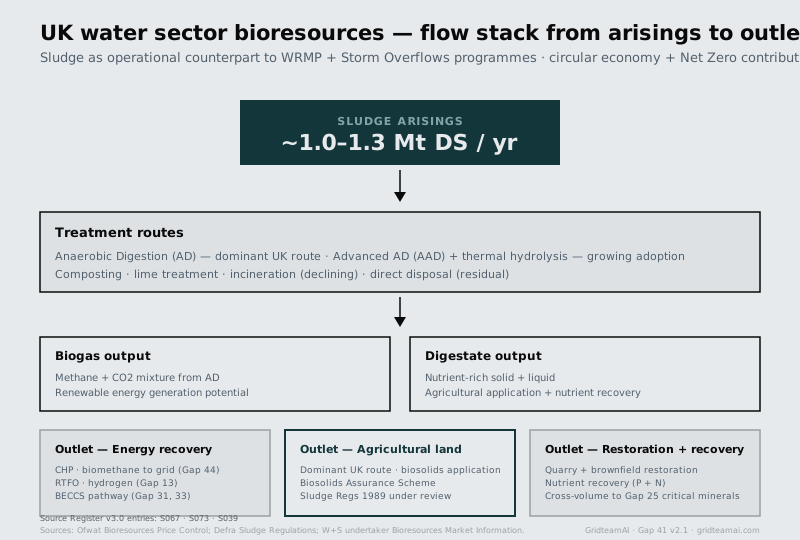
Figure 1 · The bioresources flow stackOfwat · undertakers · EA

From arisings to outlets, in one view.

Sludge arisings (~1.0–1.3 Mt DS/yr) pass through treatment — AD and AAD dominant — into two outputs, biogas and digestate, then into three outlet categories: energy recovery (CHP, biomethane, hydrogen, BECCS), agricultural land (the dominant route), and restoration plus nutrient recovery.

UK water-sector bioresources flow stack. At the top, sludge arisings of approximately 1.0 to 1.3 million tonnes dry solids per year (teal block). An arrow leads down to treatment routes: anaerobic digestion the dominant UK route, advanced AD and thermal hydrolysis growing, with composting, lime treatment, declining incineration and residual direct disposal. Treatment yields two outputs side by side: biogas (methane plus CO2, renewable energy potential) and digestate (nutrient-rich solid and liquid). These feed three outlet categories along the bottom: energy recovery — CHP, biomethane to grid (Gap 44), RTFO, hydrogen (Gap 13) and a BECCS pathway (Gap 31, 33); agricultural land, the dominant UK route, under the Biosolids Assurance Scheme and the Sludge Regulations 1989 currently under review (teal-outlined); and restoration plus recovery — quarry and brownfield restoration and nutrient recovery of phosphorus and nitrogen, cross-referenced to Gap 25 critical minerals.
Fig. 1 / Section 1

Arisings (teal) flow to three outlets. Agricultural land (teal-outlined) is the dominant UK route.

Quarterly Sector Report · Gap 412 · Twelve findings · p. 10
09 — 102 · Twelve findings · 01 – 03
2 · Twelve findings on the bioresources stream10
2 · Twelve findings on the bioresources streamQ1 2031

Twelve findings. Each carries a confidence level.

HIGH — verified against the Ofwat Bioresources Price Control, Defra Sludge Regulations, EA biosolids framework or undertaker Bioresources Market Information. MEDIUM — named UK industry or ADBA coverage cross-referenced to a primary source. LOW — GridteamAI scenario projection, marked as such.

Findings 01 – 12 · summary

  1. 01Bioresources has become a regulated market segment, not a back-office function.
  2. 02UK sludge arisings run at ~1.0–1.3 Mt dry solids per year and grow with Storm Overflows.
  3. 03Anaerobic digestion is the dominant treatment route; AAD and thermal hydrolysis are growing.
  4. 04Biogas is the largest single category of water-sector renewable energy.
  5. 05Agricultural land is the dominant outlet, constrained by the biosolids landbank.
  6. 06The Ofwat Bioresources market separates a Price Control and publishes market information.
  7. 07In-house operation still dominates; third-party market development is slow.
  8. 08Nutrient recovery connects sludge to the UK strategic-phosphorus question (Gap 25).
  9. 09The Sludge (Use in Agriculture) Regulations 1989 are under Defra review.
  10. 10Emerging contaminants — PFAS, microplastics — are the key outlet risk.
  11. 11The BECCS pathway makes bioresources a negative-emissions contributor (Gap 31, 33).
  12. 12Implications for undertakers, Ofwat, Defra, DESNZ and the biogas sector.

Findings 01 – 09 follow in detail · pp. 10 – 12 · 10 – 12 summarised on the matrix

Quarterly Sector Report · Gap 412
112 · Findings 01 – 03
2 · Findings 01 — 03The framework · the standard · the Plan
Finding 01 · HIGH

Bioresources has become a regulated market segment, not a back-office function.

Treatment, storage, transport and disposal of wastewater sludge has gone from a 1990s back-office utility function to a regulated market segment with its own performance commitments, capex programmes, market participants and circular-economy ambitions. Ofwat now runs a separate Bioresources Price Control, distinct from Wholesale Wastewater, within PR19 and PR24; the EA regulates sludge to land; Defra sets sludge and nutrient policy; and DESNZ governs biogas and biomethane through the RTFO and the Green Gas Support Scheme. Bioresources is simultaneously a regulated market, a clean-energy resource and a circular-nutrient stream — the most cross-volume-integrated activity in the water sector.

Finding 02 · HIGH

UK sludge arisings run at ~1.0–1.3 Mt dry solids per year and grow with Storm Overflows.

UK sludge arisings total approximately 1.0–1.3 million tonnes dry solids per year across the eleven English and Welsh water-and-sewerage undertakers plus Scottish Water and NI Water (Gap 42, devolved) — generated at every sewage treatment works. The figure varies by reporting basis. The growth driver is structural: population growth plus the new wastewater-treatment capacity delivered under the £88 bn Storm Overflows programme (Gap 38), with a smaller industrial-wastewater contribution (Gap 39). As treatment capacity expands to cut spills, bioresources arisings grow correspondingly — making treatment, outlet and energy capacity a programme-integration question, not a standalone one.

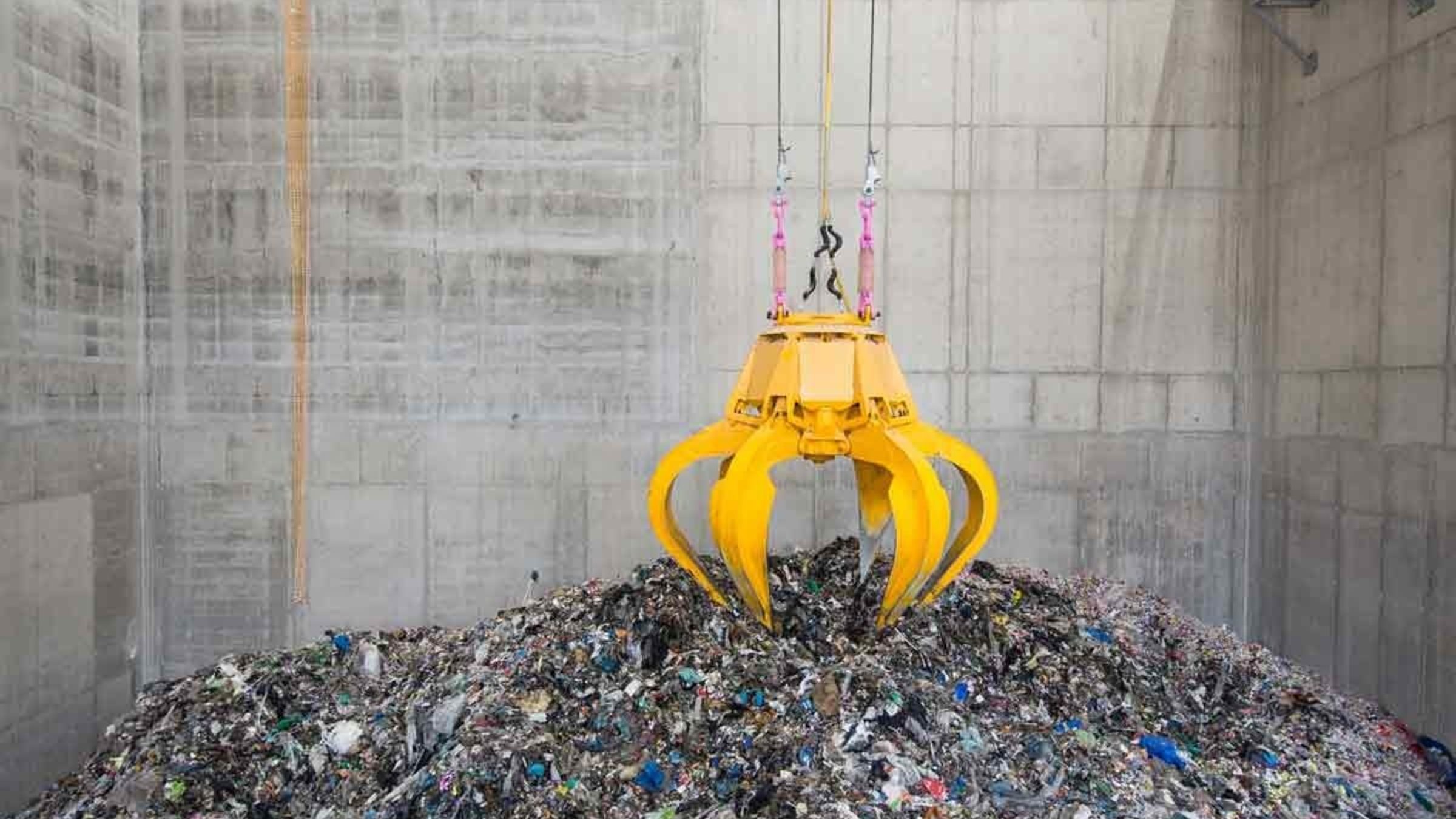
Yellow grab claw lifting municipal waste feedstock in a concrete bunker at Renescience.
Renescience — municipal waste pickup.Photo: Ørsted Renescience press centre
Finding 03 · HIGH

Anaerobic digestion is the dominant treatment route; AAD and thermal hydrolysis are growing.

Anaerobic digestion (AD) is the dominant UK sludge-treatment route: it breaks down organic matter under anaerobic conditions, producing biogas (methane plus CO2) and digestate (a nutrient-rich solid and liquid), reduces sludge volume materially and generates renewable energy. UK undertakers operate substantial AD capacity at major STWs. Advanced AD and thermal-hydrolysis pre-treatment raise biogas yield per tonne, improve digestate quality toward Class A biosolids (broader land-application uses) and reduce pathogens — adoption is growing through the PR24 cycle. Composting, lime treatment and (declining) incineration are secondary routes; direct disposal to landfill is residual.

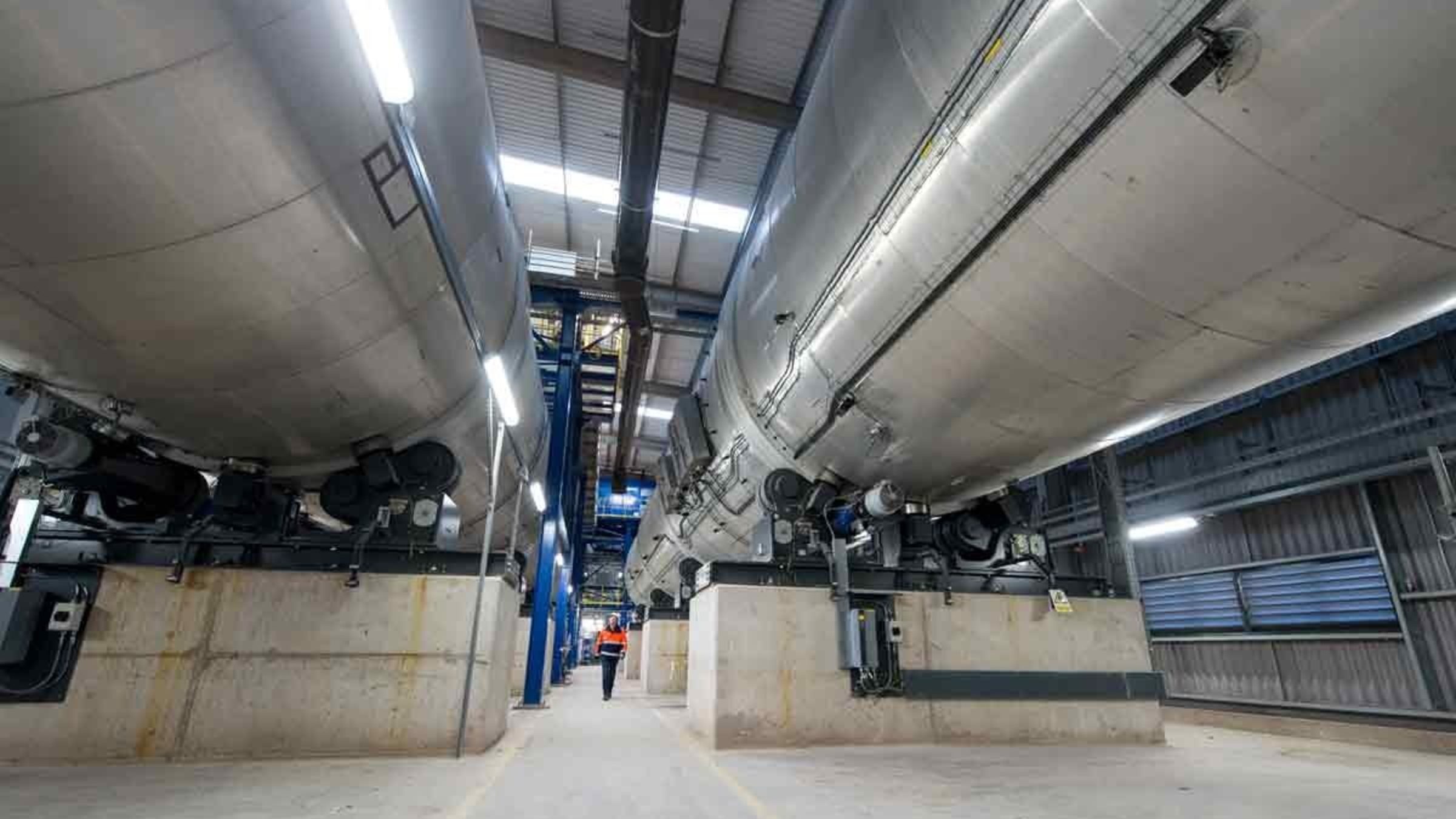
Interior of the Renescience anaerobic digestion bioreactor hall, large stainless tanks overhead, Northwich.
Renescience, Northwich — AD bioreactor hall.Photo: Ørsted Renescience press centre
2 · 01 – 03Findings 04 – 06 · facing