← GridteamAI

Purchase access

This is part of the paid GridteamAI Quarterly Sector Report.

Purchase access — book@gridteamai.com

£295 single volume · £995/yr annual · Team £2,495 · Enterprise £4,995 · Corporate £9,995. Secure checkout coming soon; email to purchase today.

GridteamAI · Quarterly Sector Report · Gap 36
UK Water Resources Management Plans 2024–2029 — WRMP24, the five regional groups and the Strategic Resource Options · Water beachhead
Series consistency · canonical Gap-series system
A4 · 210 × 297 mm · 3 mm bleed (not shown)
UK English · ~30 pp · v2.1 / Q4 2029
FRONT MATTERi · Cover · ink · full bleed
GridteamAI
Quarterly Sector Report
Volume Gap 36
Water Utilities · Resource Planning
by GridteamAI
UK · Water Resources · WRMP24 · SROs England & Wales · Q4 2029

The Water
Plans.

Five regional groups, a 1-in-500 drought standard — and the largest UK water-resource construction programme in three decades.

gridteamai.com · book@gridteamai.com v2.1 · Q4 2029 Water · Volume 2
05 — 06Executive summary · spread
UK Water Resources Management Plans · Executive summary05
00 · Executive Summary A two-page brief

Five regional groups, a 1-in-500 standard, the largest water build in three decades.

WRMP24 sets a 25-year resource-planning horizon for the eleven English and Welsh undertakers plus four water-only companies, coordinated through five regional water resource groups (WRSE, WRE, WRW, WRN, WRWales).

Most companies plan to a 1-in-500 year drought resilience standard by 2039. Without intervention, the South-East (WRSE) and East (WRE) regions face material supply-demand deficits in the 2030s, driven by population growth, climate-adjusted yield reductions and abstraction reform.

The Strategic Resource Options programme — new reservoirs (Anglian Lincolnshire + Fens, Thames SESRO, Havant Thicket), transfers (Severn-Thames, Grand Union) and recycling (Teddington, Beckton) — is RAPID-coordinated, gated, and funded across PR24/PR29/PR34. No major reservoir has been built for English + Welsh supply since Carsington (1992).

The Q4 2029 picture

GridteamAI base case: WRMP29 draft in consultation; the lead SROs (Anglian reservoirs, Havant Thicket, Severn-Thames) progressing through RAPID gates; leakage and PCC on the PR24 trajectory; Thames Water restructuring the principal WRSE execution risk.

The shape of this volume. Section 1 sets out the headline figures. Section 2 develops twelve findings, each confidence-annotated. A chapter-weight pull at p. 14 anchors the argument. Section 3 sets out the regional groups and supply-demand balance. Section 4 covers demand management and the Strategic Resource Options. Section 5 covers funding, risks and the outlook. Section 6 makes recommendations, with a one-page tear-out at p. 25.

Executive summary · ends1 · The headline figures · p. 07
09 · FIG. 11 · WRMP24 five regional groups · restyled -v2
1 · The headline figures09
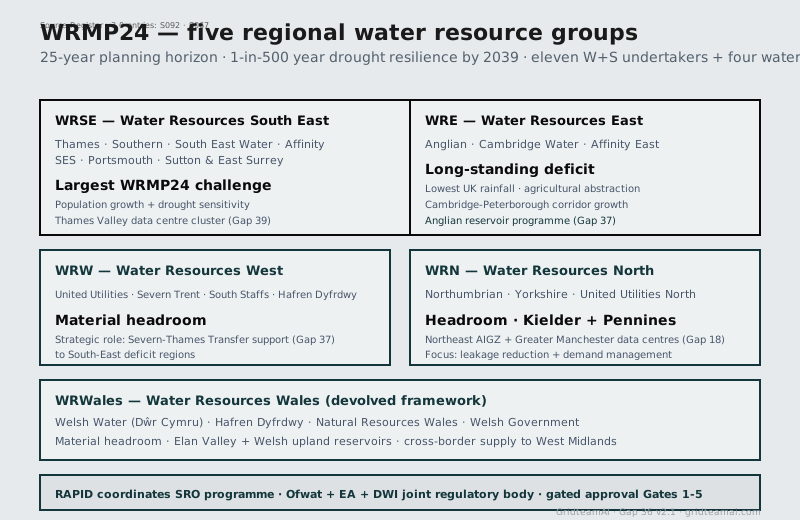
Figure 1 · WRMP24 five regional water resource groupsWRMP24 · RAPID

Five regional groups; two in deficit, three with headroom.

WRMP24 coordinates the eleven undertakers plus four water-only companies through five regional groups. WRSE and WRE face the largest supply-demand challenge; WRW, WRN and WRWales hold headroom and can support inter-regional transfers — all planning to a 1-in-500 drought standard by 2039.

Five cards for the WRMP24 regional water resource groups, planning to a 1-in-500 year drought resilience standard by 2039 across eleven water-and-sewerage undertakers plus four water-only companies. WRSE (Water Resources South East — Thames, Southern, South East Water, Affinity, SES, Portsmouth, Sutton and East Surrey), shown in ink as the largest WRMP24 challenge, with population growth, drought sensitivity and the Thames Valley data centre cluster. WRE (Water Resources East — Anglian, Cambridge Water, Affinity East), in ink, a long-standing deficit from the lowest UK rainfall and agricultural abstraction, with the Anglian reservoir programme. WRW (Water Resources West — United Utilities, Severn Trent, South Staffs, Hafren Dyfrdwy), in teal, material headroom and the Severn-Thames Transfer support role. WRN (Water Resources North — Northumbrian, Yorkshire, United Utilities North), in teal, headroom from Kielder and the Pennines. WRWales (Welsh Water, Hafren Dyfrdwy), in teal, a devolved framework with Elan Valley headroom and cross-border supply. A footer notes RAPID coordinates the SRO programme as an Ofwat, Environment Agency and DWI joint regulatory body with gated approval Gates 1 to 5.
Fig. 1 / Section 1

Deficit regions in ink (WRSE, WRE); headroom regions in teal. RAPID coordinates the cross-company SRO programme.

Quarterly Sector Report · Gap 362 · Twelve findings · p. 10
09 — 102 · Twelve findings · 01 – 03
2 · Twelve findings on WRMP24 + the SROs10
2 · Twelve findings on WRMP24 + the SROsQ4 2029

Twelve findings. Each carries a confidence level.

HIGH — verified against Ofwat, Defra, the Environment Agency, RAPID, a WRMP24 plan or a recognised industry body. MEDIUM — named UK industry coverage cross-referenced to a primary source. LOW — GridteamAI scenario projection, marked as such.

Findings 01 – 12 · summary

  1. 01WRMP24 is the statutory backbone of UK water-resource planning.
  2. 02Five regional water resource groups coordinate cross-company SROs.
  3. 03The 1-in-500 year drought resilience standard drives the investment.
  4. 04WRSE and WRE face material supply-demand deficits in the 2030s.
  5. 05WRW, WRN and WRWales hold headroom and support transfers.
  6. 06Demand management commits to leakage, PCC and smart meters.
  7. 07The SRO programme reopens UK reservoir construction at scale.
  8. 08RAPID coordinates the gated SRO approval process.
  9. 09PR24, PR29 and PR34 fund the WRMP24 25-year trajectory.
  10. 10Climate change and abstraction reform tighten the supply side.
  11. 11Industrial demand — data centre cooling — is the key WRMP29 uncertainty.
  12. 12Implications for undertakers, regulators, supply chain and Government.

Findings 01 – 09 follow in detail · pp. 10 – 12 · 10 – 12 summarised on the matrix

Quarterly Sector Report · Gap 362
112 · Findings 01 – 03
2 · Findings 01 — 03The framework · regional groups · resilience
Finding 01 · HIGH

WRMP24 is the statutory backbone of UK water-resource planning.

The Water Industry Act 1991 (Section 37A) requires every water undertaker in England and Wales to maintain a Water Resources Management Plan, reviewed every five years over a 25-year horizon, demonstrating the company can secure efficient supplies while accounting for population growth, climate change, abstraction reductions and demand management — subject to public consultation and Secretary of State (England) or Welsh Government approval. WRMP24 is the third cycle since the framework was strengthened (after WRMP14 and WRMP19), and the first under the new regional water resource groups and the first to plan to a 1-in-500 year drought resilience standard sector-wide. PR24 (Gap 35) funds the activity; the WRMPs define what is needed and where.

Finding 02 · HIGH

Five regional water resource groups coordinate cross-company SROs.

WRMP24 introduced five regional groups covering England and Wales: Water Resources South East (WRSE — Thames, Southern, South East Water, Affinity, SES, Portsmouth, Sutton and East Surrey); Water Resources East (WRE — Anglian, Cambridge Water, Affinity East); Water Resources West (WRW — United Utilities, Severn Trent, South Staffs, Hafren Dyfrdwy); Water Resources North (WRN — Northumbrian, Yorkshire, United Utilities North); and Water Resources Wales (WRWales — Welsh Water, Hafren Dyfrdwy, a devolved arrangement). The groups coordinate cross-company Strategic Resource Options, share supply-demand data, and provide the framework for inter-company transfers — the new strategic planning layer that distinguishes WRMP24 from earlier cycles.

Finding 03 · HIGH

The 1-in-500 year drought resilience standard drives the investment.

WRMP24 plans to a 1-in-500 year drought resilience standard by 2039 across most companies — a Defra policy change from the previous 1-in-200 standard, in response to lessons from the 2018 and 2022 UK droughts. The standard means each company’s water-resource system must meet demand through a drought severe enough to have a 1-in-500 chance of occurring in any year. This is the single largest driver of the WRMP24 and SRO investment programme: companies must demonstrate a credible plan to reach the standard by 2039, and the resilience uplift from 1-in-200 to 1-in-500 itself widens the supply-demand gap that the SROs must close.

2 · 01 – 03Findings 04 – 06 · facing