← GridteamAI

Purchase access

This is part of the paid GridteamAI Quarterly Sector Report.

Purchase access — book@gridteamai.com

£295 single volume · £995/yr annual · Team £2,495 · Enterprise £4,995 · Corporate £9,995. Secure checkout coming soon; email to purchase today.

GridteamAI · Quarterly Sector Report · Gap 31
UK Biomass and BECCS — Drax’s dual status, the Power BECCS programme and the negative-emissions question, decoded
Series consistency · canonical Gap-series system
A4 · 210 × 297 mm · 3 mm bleed (not shown)
UK English · 2026 edition · v1.0
FRONT MATTERi · Cover · ink · full bleed
GridteamAI
Quarterly Sector Report
Volume Gap 31
Renewables Generation
by GridteamAI
UK · Biomass · BECCS · Negative Emissions United Kingdom · Q3 2028

Biomass
+ BECCS.

Renewable and the UK’s largest CO2 emitter at once — and BECCS, the negative-emissions question that resolves it.

gridteamai.com · book@gridteamai.com 2026 edition · v1.0 Volume 4
05 — 06Executive summary · spread
UK Biomass and BECCS · Executive summary05
00 · Executive Summary A two-page brief

The largest emitter and a negative-emissions anchor — the same plant.

Drax Power Station is the UK’s largest single biomass plant (~2.6 GW, four coal-converted units) supplying ~6%+ of UK electricity — and, on stack emissions, the single largest CO2 emitter in the UK regulated power sector.

BECCS resolves the paradox: capture and sequester the CO2 Drax would otherwise stack-emit and the net balance is negative — atmospheric carbon removal at scale. It is the UK’s primary commercial-scale negative-emissions proposition.

The architecture: the DESNZ Power BECCS allocation framework + the CCUS Track-1 East Coast Cluster (Gap 33) + Drax’s retrofit FID. The CCC’s net-zero pathway assumes meaningful BECCS from the late 2020s — Drax is the obvious anchor.

The Q3 2028 picture

GridteamAI base case: Drax BECCS at FID stage but construction not yet commenced; CCUS East Coast Cluster (Track-1) in early commissioning; the operational BECCS contribution begins to materialise 2028-2030. The 7th Carbon Budget frames the scale-up signal.

The shape of this volume. Section 1 sets out the headline figures. Section 2 develops twelve findings, each confidence-annotated. A chapter-weight pull at p. 14 anchors the argument. Section 3 sets out the BECCS pathway — Power BECCS, the CCUS cluster, Drax FID. Section 4 maps the biomass ecosystem. Section 5 covers the policy debate and outlook. Section 6 makes recommendations, with a one-page tear-out at p. 25.

Executive summary · ends1 · The headline figures · p. 07
09 · FIG. 11 · Drax dual status · restyled -v2
1 · The headline figures09
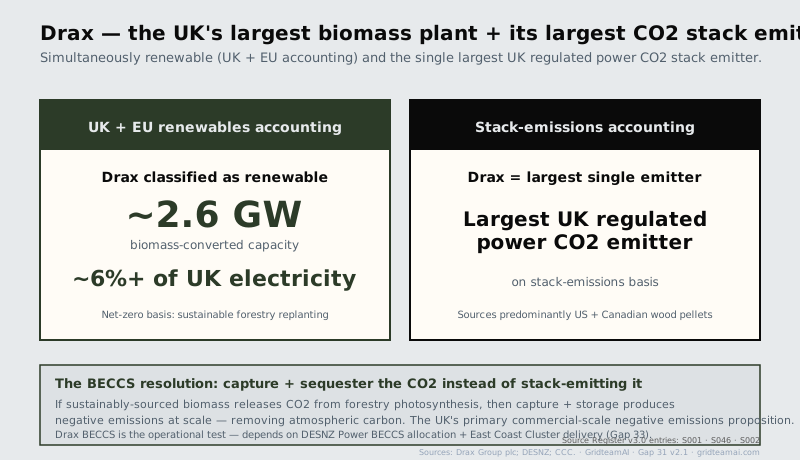
Figure 1 · Drax’s dual statusDrax Group plc · DESNZ

Renewable and largest emitter — and the BECCS resolution.

Drax is classified as renewable under UK + EU accounting (~2.6 GW, ~6%+ of UK electricity) while being the largest single UK regulated power CO2 stack emitter. BECCS — capturing and sequestering that CO2 — is the route to negative emissions.

A two-column comparison of Drax’s dual status. Left, in moss: under UK + EU renewables accounting Drax is classified as renewable — about 2.6 GW of biomass-converted capacity supplying roughly 6%+ of UK electricity, on a net-zero basis assuming sustainable forestry replanting. Right, in ink: on a stack-emissions basis Drax is the single largest CO2 emitter in the UK regulated power sector, sourcing predominantly US and Canadian wood pellets. A footer panel explains the BECCS resolution — capturing and sequestering the CO2 instead of stack-emitting it produces negative emissions at scale, the UK’s primary commercial-scale negative-emissions proposition, dependent on DESNZ Power BECCS allocation and East Coast Cluster delivery (Gap 33).
Fig. 1 / Section 1

Drax classified renewable (moss) and largest emitter (ink) at once. BECCS captures the CO2 it would otherwise stack-emit.

Quarterly Sector Report · Gap 312 · Twelve findings · p. 10
09 — 102 · Twelve findings · 01 – 03
2 · Twelve findings on UK biomass + BECCS10
2 · Twelve findings on UK biomass + BECCSQ3 2028

Twelve findings. Each carries a confidence level.

HIGH — verified against DESNZ, Ofgem, the CCC, Drax filings or a recognised industry body. MEDIUM — named UK industry coverage cross-referenced to a primary source. LOW — GridteamAI scenario projection, marked as such.

Findings 01 – 12 · summary

  1. 01Drax is the UK’s largest biomass plant and simultaneously its largest CO2 stack emitter.
  2. 02BECCS converts biomass + CCUS into negative emissions.
  3. 03UK biomass policy debate is ongoing — lifecycle, provenance, subsidy design.
  4. 04The DESNZ Power BECCS programme is the operational vehicle.
  5. 05The Drax BECCS retrofit depends on CCUS cluster maturity.
  6. 06Anaerobic Digestion + biogas is a separate UK biomass category.
  7. 07The Wood Heat Association represents biomass heat.
  8. 08Biomass forestry certification is a policy + commercial requirement.
  9. 09Biomass interacts across multiple Tranche 1 + Tranche 2 sectors.
  10. 10The Q3 2028 outlook depends on Drax BECCS FID + CCUS cluster readiness.
  11. 11Three plausible scenarios bracket the Q3 2028 picture.
  12. 12Implications for Drax, the BECCS pipeline, CCUS clusters and Government.

Findings 01 – 09 follow in detail · pp. 10 – 12 · 10 – 12 summarised on the matrix

Quarterly Sector Report · Gap 312
112 · Findings 01 – 03
2 · Findings 01 — 03Dual status · BECCS · the policy debate
Finding 01 · HIGH

Drax is the UK’s largest biomass plant + simultaneously its largest CO2 stack emitter.

Drax Power Station, near Selby, Yorkshire, is the UK’s largest single biomass plant. Originally coal-fired, Drax converted four of its six units to biomass between 2013 and 2018, with the remaining coal units retired by March 2021 — current biomass-converted capacity is approximately 2.6 GW. Drax supplies approximately 6% or more of UK electricity. On UK + EU renewables accounting it counts as renewable — biomass carbon treated as net-zero on the assumption that sustainable forestry replants and re-sequesters the released CO2. On stack-emissions accounting it is the largest single UK regulated power emitter. This dual status is structural to UK biomass policy: the renewable classification supports the historic framework; the stack-emissions reality makes BECCS the operational priority.

Finding 02 · HIGH

BECCS converts biomass + CCUS into negative emissions.

BECCS — Bioenergy with Carbon Capture and Storage — combines biomass generation with carbon capture + sequestration. If sustainably-sourced biomass releases CO2 from forestry photosynthesis, then captures + stores the CO2 in geological reservoirs rather than emitting it, the net carbon balance is negative: the operation removes atmospheric carbon at scale. For UK climate policy, BECCS is the leading commercial-scale negative-emissions technology; the Climate Change Committee’s pathway to net-zero by 2050 assumes meaningful BECCS contribution from the late 2020s. Drax is the obvious anchor for first commercial-scale UK BECCS. The architecture: DESNZ Power BECCS allocation + CCUS Track-1/Track-2 clusters (Gap 33) + CfD-style revenue support + bilateral CO2 offtake.

Finding 03 · MEDIUM

UK biomass policy debate is ongoing.

The UK biomass policy debate is materially live, across three structural questions. Lifecycle emissions accounting — UK + EU accounting assumes net-zero on forestry replanting; critics argue the carbon-debt period (harvest to full re-sequestration) is material against rapid climate timelines. Supply-chain provenance — Drax sources predominantly from US + Canadian forestry; policy depends on independent certification (FSC, PEFC, SBP), and NGO scrutiny has questioned certification rigour. Subsidy design — Drax received Renewables Obligation support and CfD contracts; the debate is whether subsidy continues, scales up under BECCS allocation, or winds down. The 7th Carbon Budget (expected late 2026 / early 2027) will be the most important single policy document on UK biomass + BECCS positioning.

2 · 01 – 03Findings 04 – 06 · facing