£295 single volume · £995/yr annual · Team £2,495 · Enterprise £4,995 · Corporate £9,995. Secure checkout coming soon; email to purchase today.
GridteamAI · Quarterly Sector Report · Gap 23
The UK Data Centre Water Question: Catchment Stress, Cooling Transition and the National Framework — the 84% overlap, the 270 ML/day, the unknown total
Series consistency · canonical Gap-series system
A4 · 210 × 297 mm · 3 mm bleed (not shown)
UK English · 2026 edition · v1.0
FRONT MATTERi · Cover · ink · full bleed
GridteamAI
Quarterly Sector Report
Volume Gap 23
Data Centre Build-out
by GridteamAI
UK · Water Resources · Catchment · CoolingUnited Kingdom · Q2 2028
The Water Question.
84% of water-intensive sites are stressed — and water is no longer a question data centres can outsource.
The UK Data Centre Water Question · Executive summary05
00 · Executive SummaryA two-page brief
84% of water-intensive sites sit in stressed catchments. Slough is "seriously water stressed".
The Environment Agency’s National Framework for Water Resources 2025 is the principal English water-resources strategy, and it singles out data centres as a sector requiring active attention — alongside agriculture, hydrogen production and the electrification of heat. Approximately 84% of water-intensive UK data centre developments are proposed for areas already water-stressed or projected to be so by 2040.
Slough — Europe’s densest data centre cluster — sits in an area the Environment Agency formally classifies as "seriously water stressed": the single most acute UK case. Thames Water estimates that under a high-growth scenario data centres would drive about 30% of new regional water demand — around 270 million litres per day, equivalent to the household consumption of ~1.85 million people.
The sector-wide UK water-consumption total is unknown — the Environment Agency calls reliable data "vital for long-term planning", and the most-cited industry survey covered only 73 of ~500 operational UK facilities. That data gap is itself the policy problem; mandatory reporting is the likely first-order intervention.
GridteamAI · Quarterly Sector Report · Gap 23UK
06Executive summary · continued
The cooling transition reshapes water exposure — it does not eliminate it.
The air-to-liquid cooling transition (Gap 19) changes — but does not eliminate — water exposure. Air-cooled evaporative towers consume substantial make-up water, peaking at summer ambient extremes when catchment stress is also highest; closed-loop direct liquid cooling consumes less in volume but introduces procurement-sensitive make-up requirements. It is a profile change, net-positive, but not a water "solution" at hyperscale density.
AI Growth Zone applications must include a statement from the local water supplier confirming sufficient access to water — the first explicit UK water-availability planning condition at zone level, making water companies formal gatekeepers.
The volume's argument
UK data centre water is no longer a routine procurement matter. It is a strategic infrastructure consideration with policy, planning and reputational dimensions — and civil-society legal challenge is now part of the planning environment. The forward outlook is about the pace and detail of the framework response, not whether the response happens.
The shape of this volume. Section 1 sets out the headline figures. Section 2 develops twelve findings, each confidence-annotated. A chapter-weight pull at p. 14 anchors the argument. Section 3 sets out the stress overlap and the National Framework. Section 4 develops the Thames quantification and the cooling link. Section 5 isolates the policy stack and the operational responses. Section 6 makes recommendations, with a one-page tear-out at p. 25.
Executive summary · ends1 · The headline figures · p. 07
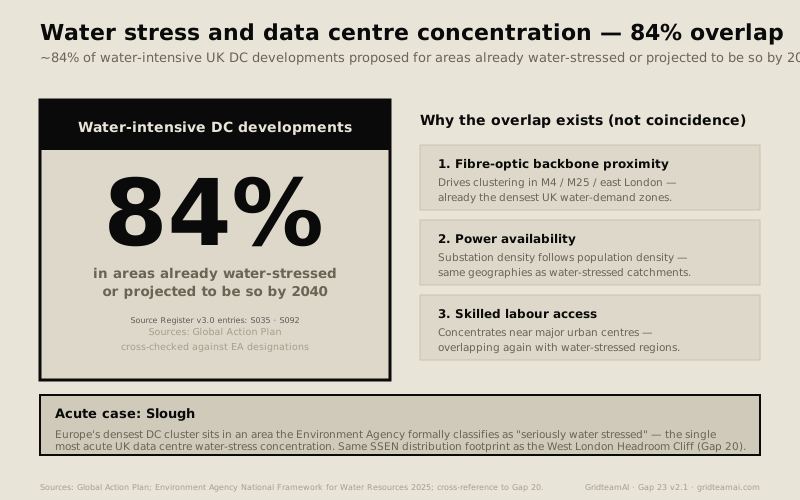
Figure 1 · Water stress & DC concentrationGlobal Action Plan · EA
~84% of water-intensive UK DC developments sit in stressed catchments.
The overlap is structural, not incidental: fibre proximity, power availability and skilled-labour access all concentrate DCs in the same population-dense, water-stressed geographies. Slough is the acute case — "seriously water stressed".
Fig. 1 / Section 3
The 84% overlap (ink) is structural, not coincidental. Slough is the single most acute UK water-stress concentration.
Quarterly Sector Report · Gap 232 · Twelve findings · p. 10
09 — 102 · Six findings · 01 – 04 · 2×2 grid
2 · Twelve findings on the water question10
2 · Twelve findings on the water questionQ2 2028
Twelve findings. Each carries a confidence level.
HIGH — verified against an Environment Agency, government or water-company primary source. MEDIUM — named industry, civil-society or analytics source cross-referenced to a primary source. LOW — GridteamAI scenario projection or interpretation, marked as such.
Findings 01 – 12 · summary
01The National Framework for Water Resources 2025 is the operative strategic document.
02The data position is genuinely poor — and that is itself the policy problem.
03Water stress and data centre concentration overlap geographically.
04Thames Water’s regional scenario is the most precise quantification available.
05The cooling transition reshapes the water demand profile.
06AI Growth Zone applications have a water-availability planning condition.
07A UK Water Exploitation Index is on the policy roadmap.
08Civil society legal challenge is now a meaningful planning risk.
09The water question is intertwined with planning, grid and AI strategy.
10Water reuse, effluent reuse and rainwater harvesting are operational responses.
11The Q2 2028 outlook depends on data, framework and discipline.
12Implications for operators, water companies, planners and Government.
Findings 01–06 in detail · pp. 11–13 · 07–12 summarised above
Quarterly Sector Report · Gap 232
112 · Findings 01 – 02
2 · Findings 01 — 02The National Framework · the data gap
Finding 01 · HIGH
The National Framework for Water Resources 2025 is the operative strategic document.
The Environment Agency’s National Framework for Water Resources 2025 — water for growth, nature and a resilient future — is the principal English water-resources strategy published in 2025. Section 9, Taking action on other significant water-using sectors and emerging demands, explicitly singles out data centres, positioning them alongside agriculture, hydrogen production and the electrification of heat as sectors whose demand pathways require coordinated planning rather than ad hoc accommodation. The Framework is non-statutory but materially influential: water companies’ Water Resources Management Plans, EA licensing decisions and DEFRA policy positions all reference it as the operative baseline. The implication is that water has been formally elevated from a routine procurement matter to a strategic infrastructure consideration — the most material UK water-policy development affecting the sector this decade.
Sources · Environment Agency National Framework for Water Resources 2025, s.9
Finding 02 · HIGH
The data position is genuinely poor — and that is itself the policy problem.
The Environment Agency has stated that reliable data on UK data centre water use is "vital for long-term planning" and is not currently available; the sector-wide total is unknown. The most-cited data point — the techUK industry survey — covered only 73 of approximately 500 operational UK facilities, and the 73 were self-selecting, introducing bias that almost certainly understates sector-average consumption. This gap is itself the policy problem: the EA cannot model future demand, planning authorities cannot assess catchment-level cumulative impact, and water companies cannot plan supply augmentation against a precise forecast. Closing it is the first-order intervention — mandatory water-consumption reporting for facilities above a threshold IT load, comparable to the Energy Performance of Buildings treatment of large commercial buildings, is now a likely policy direction.
 GridteamAI